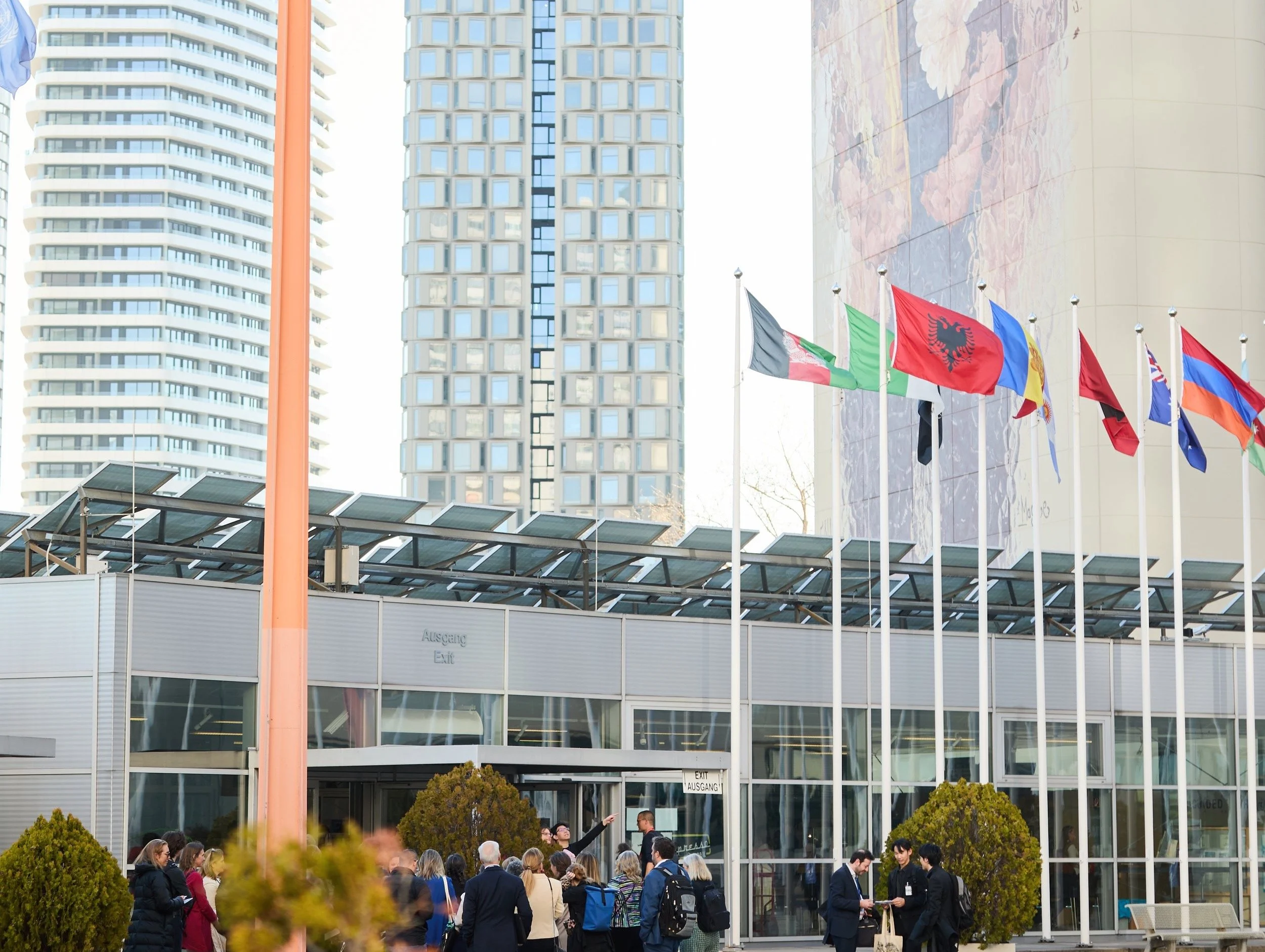
Each spring, people from across sectors and geographies gather in Vienna under a shared ambition: reducing barriers for persons with disabilities.
Policy-makers, founders, researchers, funders, and technologists move through the same rooms, often speaking different professional languages, but circling the same questions.
How do ideas that work in one place survive elsewhere?
What breaks when scale meets reality?
And what kind of support actually helps innovation last?
For me, #ZeroCon25 was a checkpoint in a longer body of work I’ve been part of for the past two years.
Scaling is not expansion. It’s translation.
The Scaling Solutions Programme exists to address a problem that sounds simple and rarely is.
Many initiatives already work. They have proof, traction, and lived impact. What they don’t have is certainty that their work will hold when it moves into new contexts: different countries, systems, regulations, cultures, and funding logics.
Scaling is not about doing more of the same.
It’s about translation.
What survives depends less on ambition and more on structure, timing, and judgment.
Working from inside the system
As part of Inclusive Creation, I served as a lead facilitator within the programme. That role places me close to founders and teams as they navigate uncertainty rather than outcomes.
I walk with them early, when questions are still forming and decisions remain reversible.
Much of the work happens before anything looks like progress:
clarifying what must remain unchanged
identifying what can adapt
deciding what not to pursue yet
It’s strategic work, but it’s also relational. Progress rarely comes from answers alone. It comes from the right questions asked at the right moment, with enough trust to pause instead of rush.

Patterns you only see up close
This year, I worked alongside fourteen scaling journeys. The initiatives varied widely, from AI-based screening tools to tactile playgrounds, from inclusive hiring models to emotional support technologies.
What connected them wasn’t the sector or the solution.
It was the moment they all reached eventually.
The moment where scale stops being theoretical.
That’s when new questions surface:
Who actually carries this forward?
What breaks if we move too fast?
Which partnerships add clarity, and which add noise?
Being inside those conversations changes how you understand growth. It becomes less about momentum and more about alignment.
Building support that doesn’t disappear
Scaling doesn’t fail because ideas are weak. It fails when support structures collapse under pressure.
Part of my work has been about designing spaces that hold over time:
shared workspaces that allow peers to learn from one another
advisor relationships grounded in relevance, not prestige
rhythms that create continuity rather than urgency
Together with Dr. Anthony Giannoumis, we also shaped Pathways to Zero Barriers, a podcast designed not to promote solutions, but to document the reality of scaling as it unfolds.
Visibility matters, but only when it reflects truth.

A significant moment
The programme culminated in Vienna with Scaling Fellows presenting their work at the United Nations.
Not as guests.
As peers.
Standing alongside leaders from global organisations, they spoke with clarity about where their work could go next, and what it would require to get there responsibly.
Not growth without grounding.
But work that connects structure to purpose, and ambition to care.
What Remains
Scaling is not a sprint. It’s a path that unfolds unevenly, often quietly, always demanding attention.
In my role, whether as a facilitator, strategist, or builder, I’ve learned this:
What lasts is rarely the loudest thing in the room.
It’s the work that holds when conditions change.
Closing Note
This reflection draws from my work within the Scaling Solutions Programme, part of the Zero Project ecosystem. Links to the programme and public resources are available through Zero Project and Inclusive Creation.